Sleep & routines
Millet-Filled Sleep Cushions: What to Know Before Choosing One
A pillow filled with grain hulls offers a different bargain from the plush softness many sleepers expect: less sink, more structure, and the ability to shift the fill around your head and neck. Before choosing one, understand how firmness, adjustability, airflow, sound and care fit into your own idea of a comfortable night.
Published November 21, 2026
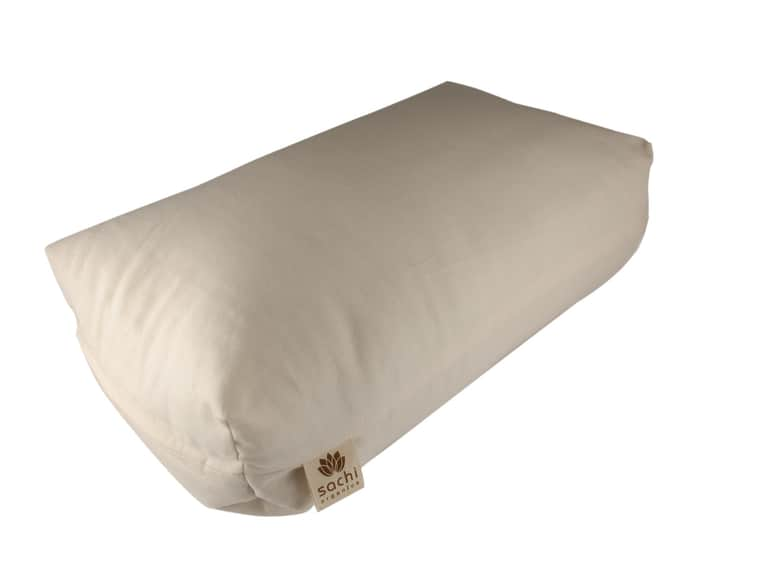
Millet is most familiar as a small grain cultivated and eaten in many parts of the world. In some sleep cushions, however, it appears not as food but as a fill: the hard outer hulls left after the edible grain is removed. Those hulls create a notably different sleeping surface from down, wool or silk. They shift in small increments, hold their shape around pressure, and tend to feel firm rather than yielding.
That distinction is the point. A millet-hull pillow is not a softer version of a conventional fiber pillow, and it is not automatically better because its fill is plant-derived. It is a particular kind of support, with advantages and compromises that depend on the sleeper, the pillow’s construction and the maker’s care instructions. The useful question is not whether millet is “natural,” but whether a moldable, relatively firm cushion suits the way you sleep.
This guide explains what to assess before choosing one: how hull fill behaves, what adjustability really means, how sleeping position affects fit, and why weight, rustling and upkeep deserve a place in the decision. It also distinguishes millet from other natural-fill bedding materials, because a label such as “natural” can cover very different experiences.
What millet hull fill feels like
Unlike loose down clusters or wool fibers, millet hulls are small, firm shells. In a pillow, they make a fill that can move when pressure is applied but does not compress into the same soft, airy cushion as down. A sleeper can press a hollow into the surface or redistribute the hulls to shape a supportive ridge. The result is often described as moldable, but that word should not be mistaken for plush.
With a conventional fiber pillow, the head may sink into a broad, soft surface. With hulls, the sensation is more structured: the contents move aside and settle around the head, while the cushion’s overall mass remains comparatively substantial. Some people value this stable, shaped feel. Others find the firmness unfamiliar or too pronounced, particularly if they are accustomed to a pillow that gently collapses under the head.
Comfort is personal, and a fill type alone cannot guarantee neck alignment or pain relief. The pillow’s height, dimensions, amount of fill and the user’s mattress all matter. Even two pillows containing similar hulls may feel different if one has a densely packed chamber and another has a larger, adjustable fill space.
It is also important not to confuse millet hulls with buckwheat hulls. Both are used as firm, shifting fills, but they come from different plants and are not interchangeable product specifications. If a listing says only “grain hulls” or uses broad language such as “natural fill,” check the exact material before relying on comparisons or care assumptions.
Firmness is a preference, not a performance score
Firmness can sound like a simple scale, yet it combines several sensations: how much the pillow yields, how readily its fill shifts, whether the head feels cradled, and how much lift remains under the neck. Millet hulls generally bring a more structured feel than soft down or silk fill, but the specific firmness depends on the amount of fill and how tightly the pillow is packed.
A firm cushion may appeal to someone who wants a stable surface that can be shaped rather than a lofty pillow that compresses broadly. It may disappoint a sleeper looking for softness, a light cloudlike feel, or easy movement of the head into a deep cushioned hollow. Neither response is a failure of the material. It is a mismatch—or a match—between expectations and the pillow’s physical character.
When assessing firmness, consider what happens after you lie down, not simply how the cushion feels in your hands. Does it retain enough height to support the space between your head and mattress? Can you shape it without repeatedly pushing fill back into place? Does its pressure feel comfortable at the ear, cheek and side of the head? If possible, testing a sample in a setting with a suitable return policy can be more informative than relying on a brief description.
There is no universal firmness target for a particular sleep position. Body shape, shoulder width, mattress softness and personal comfort all influence the height and support that feel appropriate. A pillow is one part of the sleep setup, not a stand-alone solution for every posture or discomfort.
Adjustability: useful only when it is practical
Some hull-filled pillows have a zipper or another opening that lets the sleeper remove or add fill. Adjustability can make a meaningful difference because pillow height is central to fit. A side sleeper with broad shoulders may need more loft than a stomach sleeper, while a back sleeper may prefer a middle ground. But the label “adjustable” tells only part of the story.
Before choosing, check whether the opening provides direct access to the fill, whether the fill can be removed in small amounts, and whether the removed hulls can be stored cleanly. A well-designed access point should be secure during use and practical enough that adjustment does not become a messy, one-time ordeal. Ask whether the manufacturer supplies guidance about starting fill levels or recommends keeping removed material in a sealed container.
Make changes gradually. Remove a modest amount, lie down in your usual position and reassess before removing more. An overfilled pillow can feel too high or hard to shape; an underfilled one may not provide the height you need. Save the removed hulls rather than discarding them while you test. It may take several nights to judge a small adjustment, particularly if the feel differs substantially from your previous pillow.
Adjustability is not the same as universal suitability. It cannot transform hulls into soft down, nor can it ensure that a given pillow size works for every body or mattress. It simply provides a way to change the volume and, as a result, the pillow’s profile and feel.
Think about sleep position—and the whole bed
Sleep position can help narrow the questions to ask, but it should not be treated as a rigid rulebook. Side sleepers often need enough height to fill the space between the head and mattress; back sleepers commonly look for a height that supports without pushing the head too far forward. Stomach sleepers frequently prefer a much lower profile. These are starting points, not guarantees.
Mattress firmness changes the picture. A shoulder may sink more deeply into a soft mattress than into a firm one, altering the distance the pillow needs to bridge. A broad-shouldered side sleeper on a firm mattress may have different needs from a narrower-shouldered sleeper on a plush surface. A pillow that felt appropriate in one bed may not feel the same after a mattress change.
Combination sleepers should also consider how readily the pillow can be reshaped after turning. A moldable fill can be positioned for one posture, but the sleeper may need to move it again when changing sides or rolling onto the back. Think about whether that hands-on adjustment sounds useful or disruptive in the middle of the night.
Comfort is worth monitoring over more than one trial night, but persistent or worsening pain deserves attention beyond bedding choices. A new pillow cannot diagnose or treat a medical condition. If discomfort continues, consult a qualified health professional rather than assuming that a different fill will resolve it.
Airflow, temperature and the cover
Loose hulls leave spaces between pieces, which can permit air to move through the fill more readily than tightly packed solid foam. That construction may feel less enclosed to some sleepers. But airflow is not a promise that a pillow will keep every user cool. Temperature also depends on the cover fabric, pillowcase, room conditions, bedding layers and individual heat sensitivity.
Look closely at the cover as well as the fill. A breathable, durable fabric can affect how the cushion feels against the face and how well it contains the hulls. The closure matters: a zipper must stay shut during ordinary use, and seams should be sound enough to prevent leakage. A separate washable pillowcase can help keep the outer sleeping surface fresh, though it does not replace the maker’s instructions for cleaning the pillow itself.
Natural materials are not automatically suitable for everyone with sensitivities. Anyone concerned about allergies or irritants should check the exact materials, processing and cleaning guidance, and should not interpret a broad “hypoallergenic” claim as a guarantee of a reaction-free experience. The pillowcase, laundering routine and bedroom environment can be relevant, too.
Sound and weight are part of the experience
Because hulls are separate pieces rather than continuous fibers, they can make a soft rustling sound when the sleeper moves or shapes the cushion. How noticeable that sound is depends on the hulls, the cover, the fill level and the room. Some sleepers barely register it; others may find it distracting, especially in a quiet bedroom or when sharing a bed with someone sensitive to small noises.
Weight is another practical distinction. A bag of loose hulls can make a pillow feel heavier than a comparable soft-fiber pillow. That mass can contribute to a grounded, stable sensation, but it may make the pillow less convenient to reposition, carry or shake out. If you regularly travel with your pillow, or move it between sleeping spaces, consider that everyday handling before choosing.
Neither quality is inherently good or bad. They are simply easier to appreciate when encountered in advance. If the sound or heft is likely to bother you, seek a return policy that gives you time to assess the pillow at home. Read the policy closely, including any conditions on opened bedding, hygiene seals or shipping costs.
How millet compares with other natural-fill bedding
“Natural fill” is a broad category, not a single sensation. Millet hulls, wool, down and silk differ in structure, resilience, compressibility and maintenance. Comparing them by the experience they offer is more useful than assuming that one is superior because it comes from a plant or animal.
- Millet hulls: A firm, shifting fill that can be shaped around the head. Adjustable designs let users change the amount of fill, but hulls may feel heavy or make a soft rustling sound.
- Wool: A fibrous fill that generally feels more yielding than hulls and may be compressed and lofted differently. Some wool pillows allow fill adjustment; care requirements vary by construction.
- Down: Light, lofty clusters that create a soft, compressible feel. Down may suit sleepers who enjoy gentle cushioning, though the exact support depends on the fill and pillow design.
- Silk: A smooth, often soft-feeling fill or fabric component. Silk pillows vary substantially in density and construction, and product care may be more specialized than for ordinary washable bedding.
- Buckwheat hulls: Another firm, moldable hull fill. It is distinct from millet and should be considered according to its own product details and care guidance.
The comparison becomes clearer when you ask what you want the pillow to do. If the priority is a soft, airy pillow that compresses readily, down or some fiber designs may be a closer starting point. If you want a cushion that can be shaped and feels comparatively stable, hull fill may be worth considering. Wool and silk occupy their own range of textures and constructions; neither label predicts one precise level of firmness.
Examples elsewhere in the bedding category show how varied natural-fill construction can be. The Savvy Rest Wool Pillow, for instance, uses adjustable certified organic wool fill, while the Down Pillow is described as light and lofty. These are not substitutes for a millet-hull cushion; they illustrate why material, loft and construction should be compared separately rather than grouped under a single natural-material label.
Upkeep: follow the maker, not assumptions
Care is one of the most important questions to settle before buying a hull-filled cushion. A pillow may have a removable cover, an inner chamber, or a closure for adjusting fill, but those features do not mean the entire pillow can be machine washed. Water or aggressive cleaning may be unsuitable for the fill, and product designs vary. Follow the manufacturer’s directions for the specific pillow rather than borrowing care advice from another hull-filled product.
Ask whether the outer cover can be removed and laundered, how the fill should be protected, and what to do if it becomes damp or soiled. If instructions are unclear, contact the maker before purchase. A washable pillowcase and regular laundering of compatible covers can help maintain the sleep surface, but they are not a replacement for guidance about the interior.
For adjustable models, plan how to handle loose fill during changes. Use a clean, contained surface, keep children and pets away from open hulls, close the zipper fully and store spare material in a dry, sealed container. These are practical precautions, not a claim that every pillow requires the same process; the manufacturer’s instructions take priority.
It is also sensible to ask about expected lifespan and replacement guidance. A fill may settle, a cover may wear, or a closure may eventually need attention. No material stays unchanged forever, and a “natural” description does not by itself establish durability, compostability or end-of-life handling. Look for specific information rather than relying on assumptions.
A focused checklist before choosing
Before deciding, consider the following questions. Clear answers can help distinguish a genuine fit from an appealing description:
- What is the exact fill? Confirm that the product uses millet hulls, not a different grain hull or a generic blend.
- How firm and heavy does it feel? Look for a detailed description, and try it if a suitable trial option is available.
- Can the fill be adjusted? Check how the chamber opens, how much fill can be removed and whether spare hulls can be stored.
- What height will suit your bed? Consider your sleep position, shoulder width, mattress firmness and whether you change positions at night.
- How much sound is acceptable? Hulls may rustle as they move; consider whether this could interrupt your sleep.
- What can be washed? Verify the care instructions for the cover, inner chamber and fill separately.
- What are the return terms? Understand the trial period and any restrictions before opening or using bedding.
- What claims are supported? Treat broad statements about health, cooling or allergy relief cautiously unless the maker provides specific, credible evidence.
Who might appreciate a millet-hull pillow?
A millet-hull cushion may interest a sleeper who prefers firm, moldable support and likes the idea of adjusting the pillow’s fill. Its structured feel can be appealing to people who want to shape the surface rather than sink into a soft, lofty pillow. A person curious about less-common bedding materials may also find the contrast useful, provided expectations are realistic.
It may be less appealing to someone who prizes lightness, quiet movement or a plush, compressible surface. Sleepers who want a pillow that can simply be tossed into a washing machine should check care details carefully; many filled bedding products need more specific treatment. Anyone sensitive to firmness, noise or weight should pay particular attention to those characteristics before buying.
The strongest reason to choose a millet-hull fill is not that it is unusual. It is that its particular qualities match the way you want a pillow to behave. Material curiosity can start the search, but comfort, fit and maintenance should finish it.
The decision, in plain terms
Millet hulls offer a distinct alternative to down, wool and silk: firm, shapeable support with a more tangible, shifting feel. Adjustability can help refine the pillow’s profile, while the same construction may bring added weight and a degree of rustling. Airflow, comfort and upkeep depend on the complete design, not merely the name of the fill.
Take time to verify the material, access to the fill, care instructions and return conditions. Then judge the pillow against your own sleep position and preferences—not an idealized promise that a natural material will suit everyone. A well-chosen pillow is not the one with the most compelling label. It is the one that feels comfortable, fits the bed and remains manageable in daily use.